CleanCut Health
A live preventive-care platform that routes health actions through trusted community partners — and pays for verified outcomes, not impressions.
Problem:Preventive care reaches the people who need it least. The members enterprises can't engage don't trust hospitals or health apps — but they do trust the salon, the pulpit, the corner store.
Core decision: Make the verified health action the unit everything turns on — routed through trusted local partners, and paid for as an outcome, not an impression.
Outcome: A live platform. CleanCut reports 750+ advocates trained, 150+ community spaces activated, and 10,000+ people engaged through verified health actions.
The problem.
Preventive care doesn't fail because the care doesn't exist. It fails because the people who need it most are the hardest for the system to reach — and the channels enterprises use to reach them (mailers, apps, cold calls) are exactly the ones those communities have learned to tune out.
The trust sits somewhere else entirely. The most effective health messengers were never in hospitals; they're faith leaders, stylists, shop owners, and organisers — the people a community already listens to.
What if care travelled through the people communities already trust, instead of the institutions they don't?
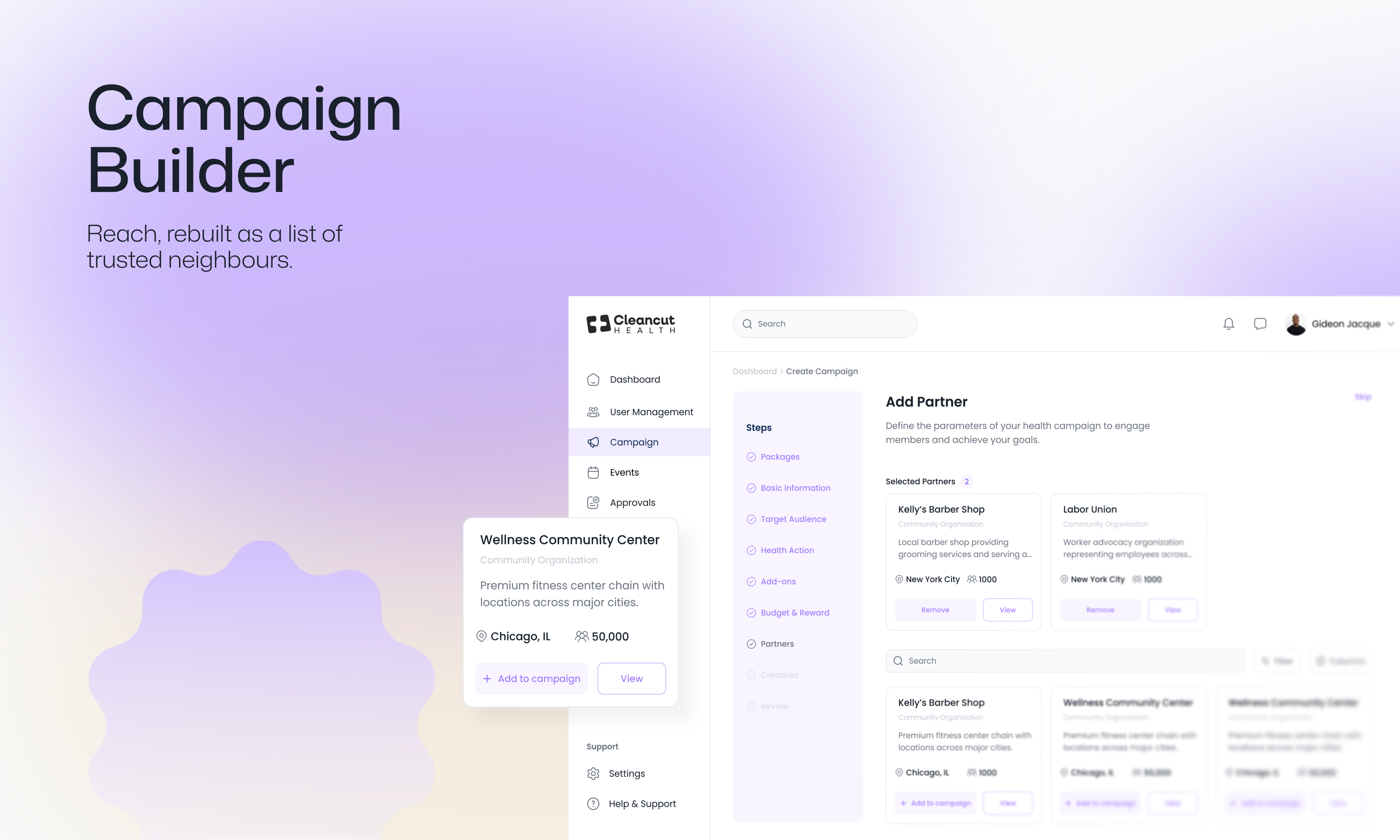
The model.
CleanCut connects healthcare enterprises to those trusted local voices and equips them — with AI tooling, funding, and expert support — to deliver preventive care inside the spaces people already gather.
The move that makes it work as a product is economic: every screening, referral, and enrolment is documented and verified, and the platform pays for those verified actions rather than for reach. Sponsors fund outcomes; partners and members earn for real ones.
Guiding tenets.
Trust is the channel. Care moves through people a community already trusts — not through a brand trying to earn that trust cold.
Pay for verified action, not attention.If it isn't documented and verified, it doesn't count — for sponsors, for partners, or for the model's credibility.
Reward both sides. Members and partners both earn for real health actions, which is what makes engagement sustainable instead of one-off.
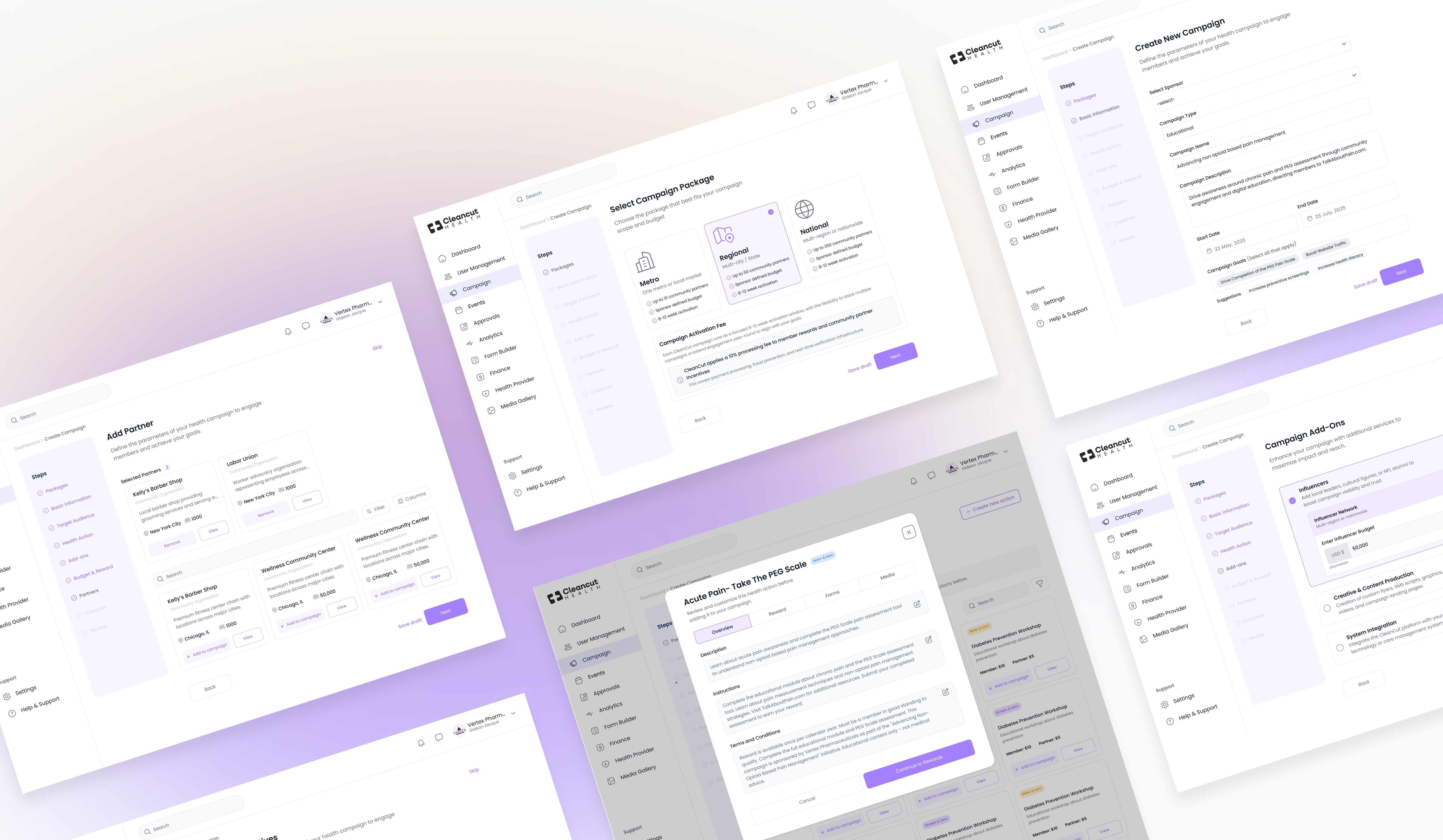
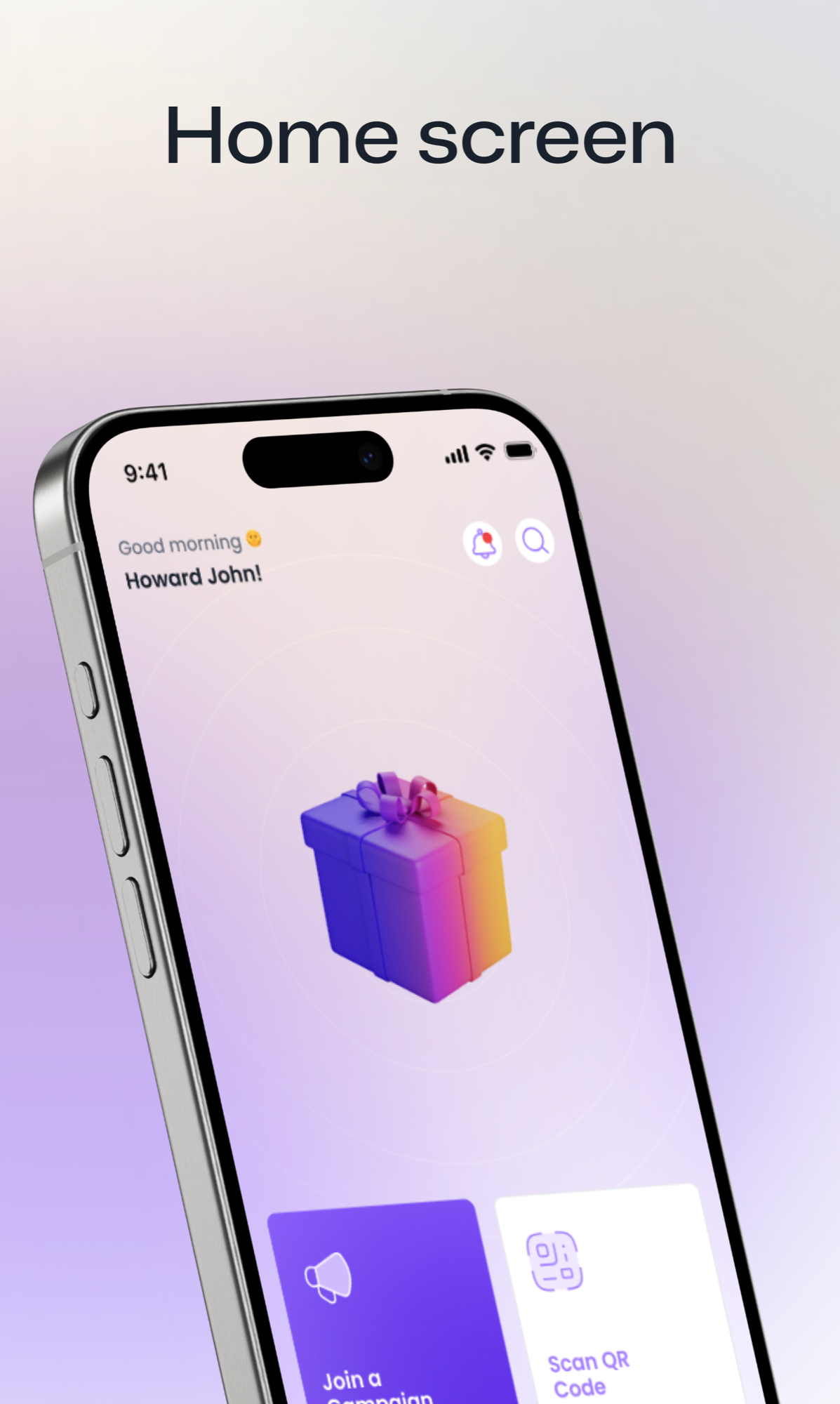
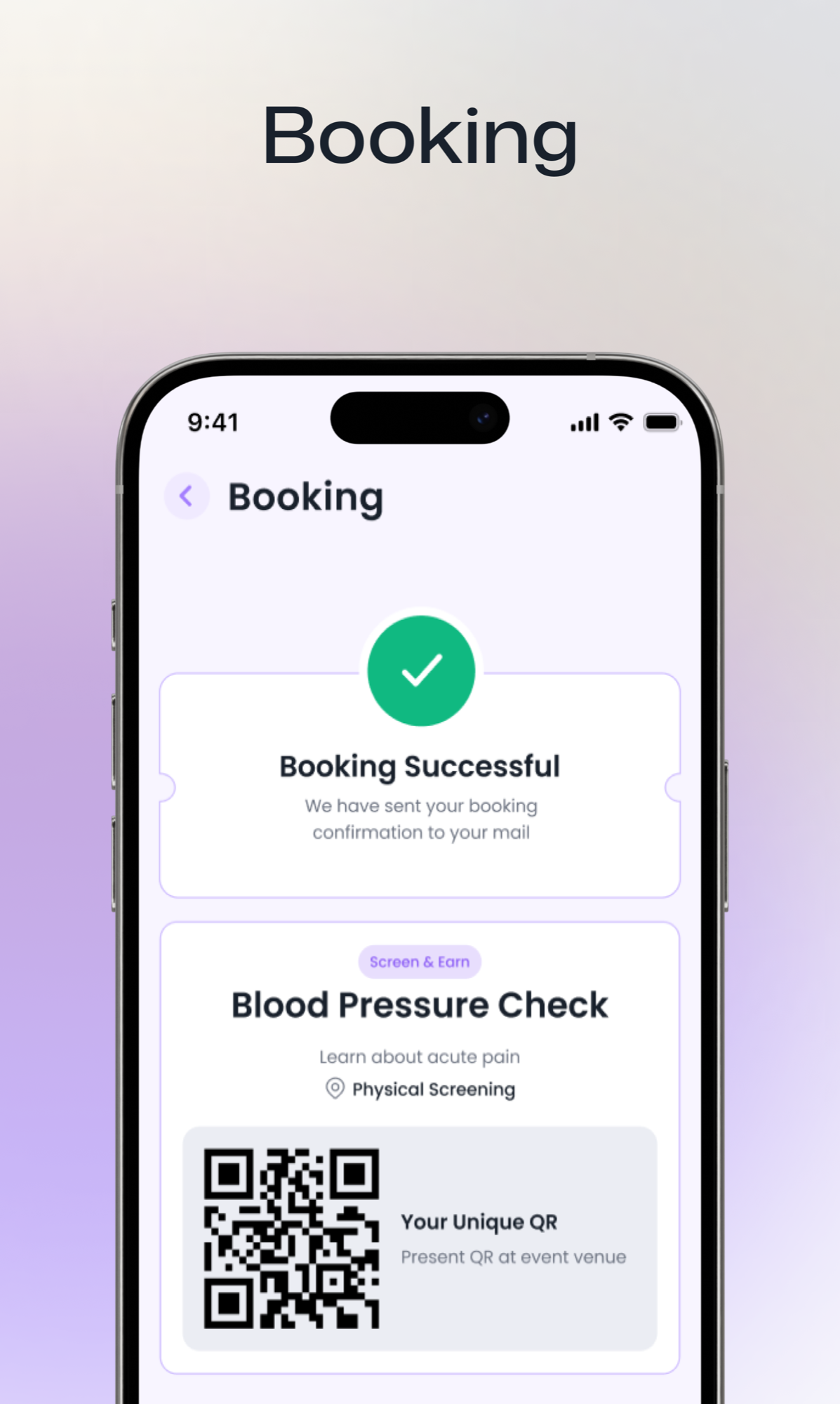
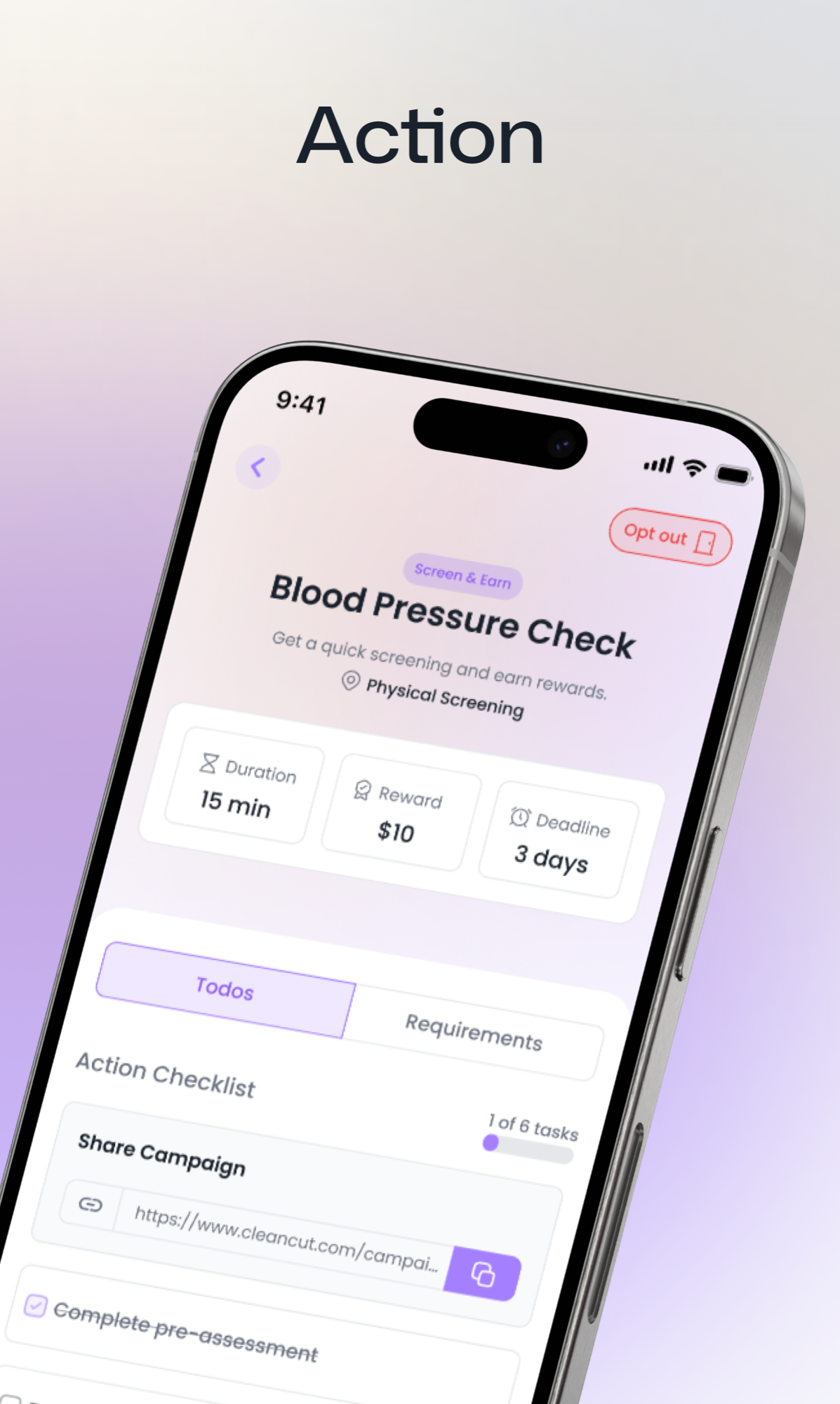
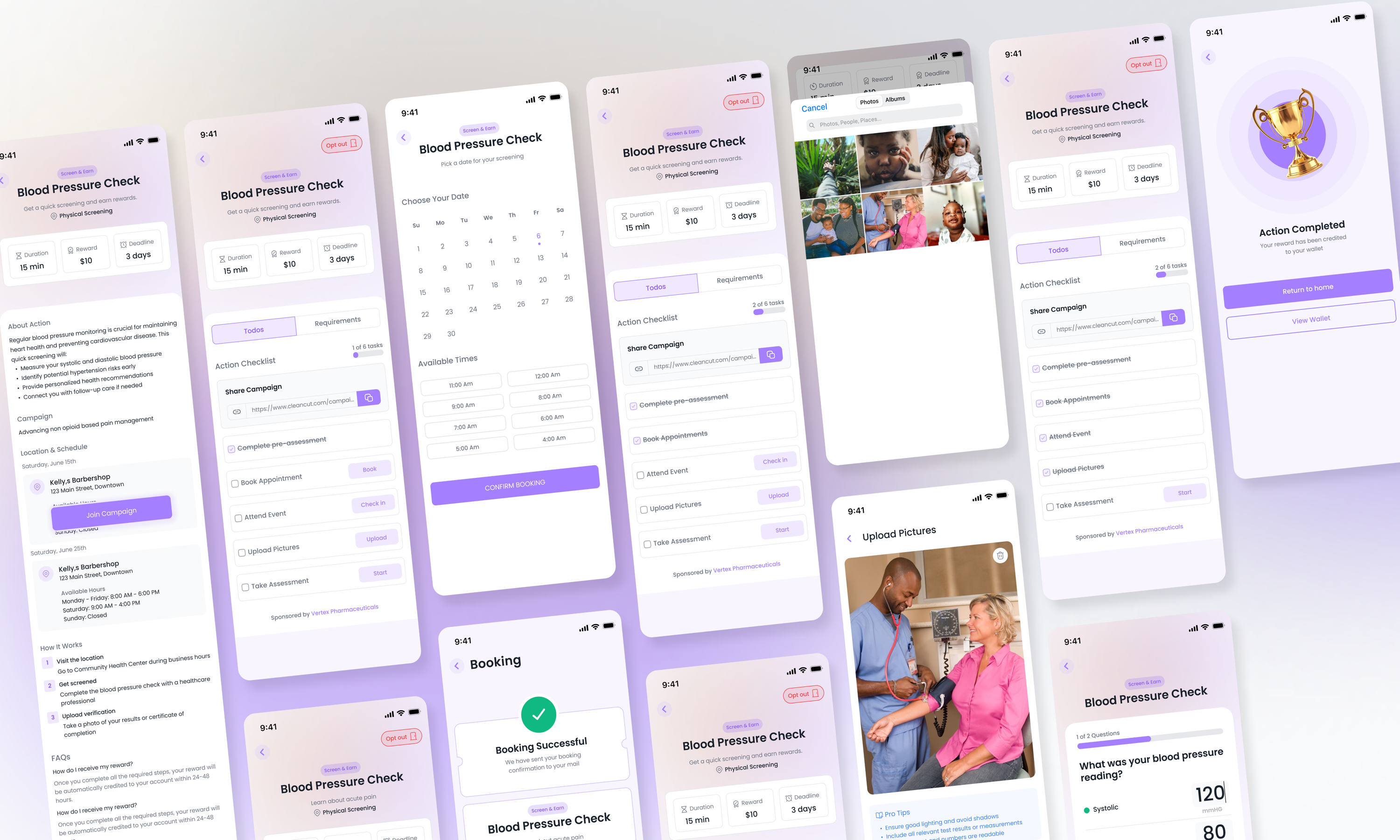
One platform, one verified action, many sides.
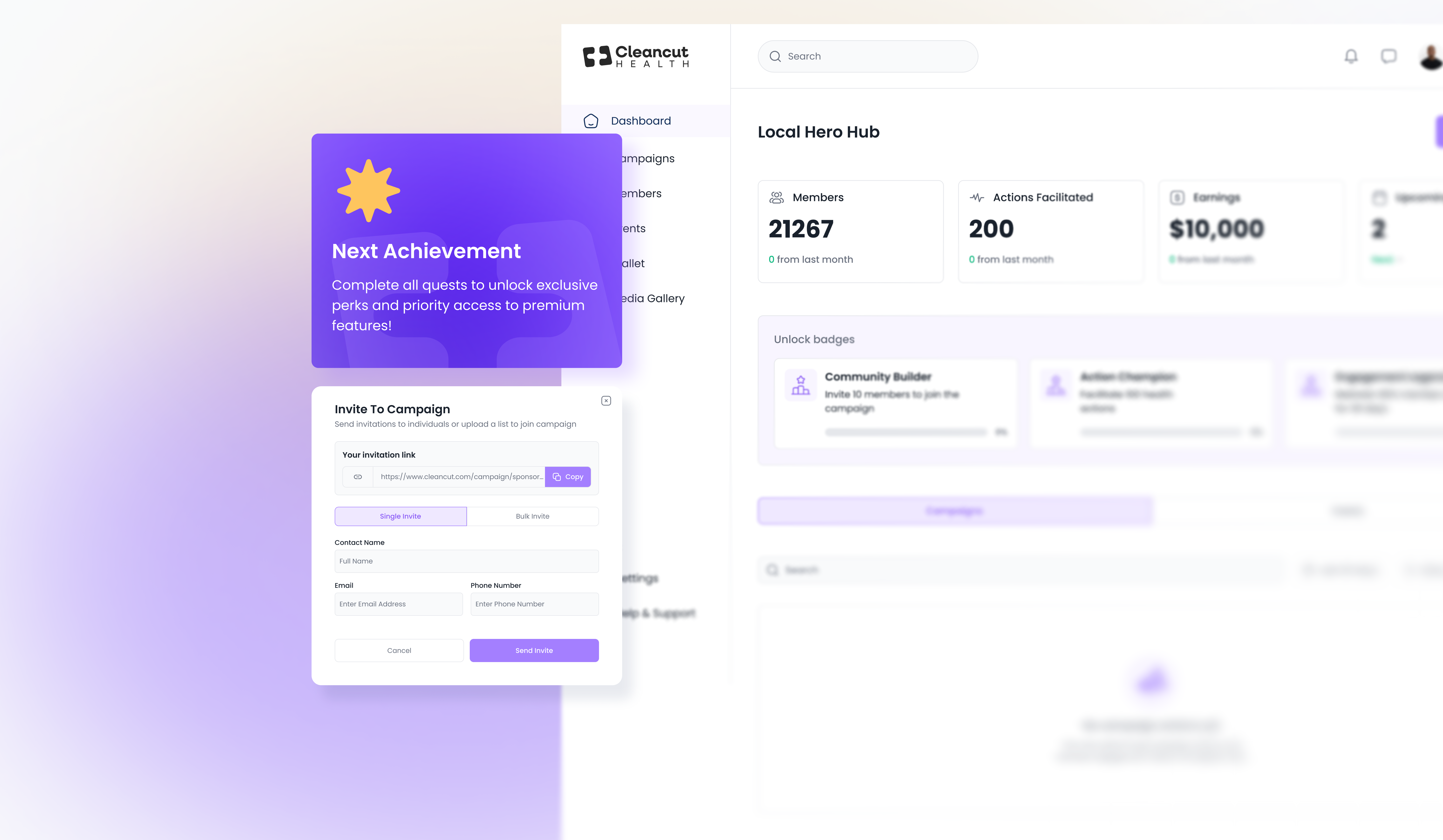
The platform has two transacting sides — enterprise sponsors who fund verified actions and members who complete them — with a platform admin as the gate between them, approving campaigns before launch and verifying proof after each action. Around that core sits the distribution layer the model actually runs on: community partners who host and run campaigns on the ground, and influencers who lend trusted reach.
Every party sees a different surface, and all of them are organised around the same verified action, so incentives, reporting, and experience stay coherent instead of fragmenting into separate products.
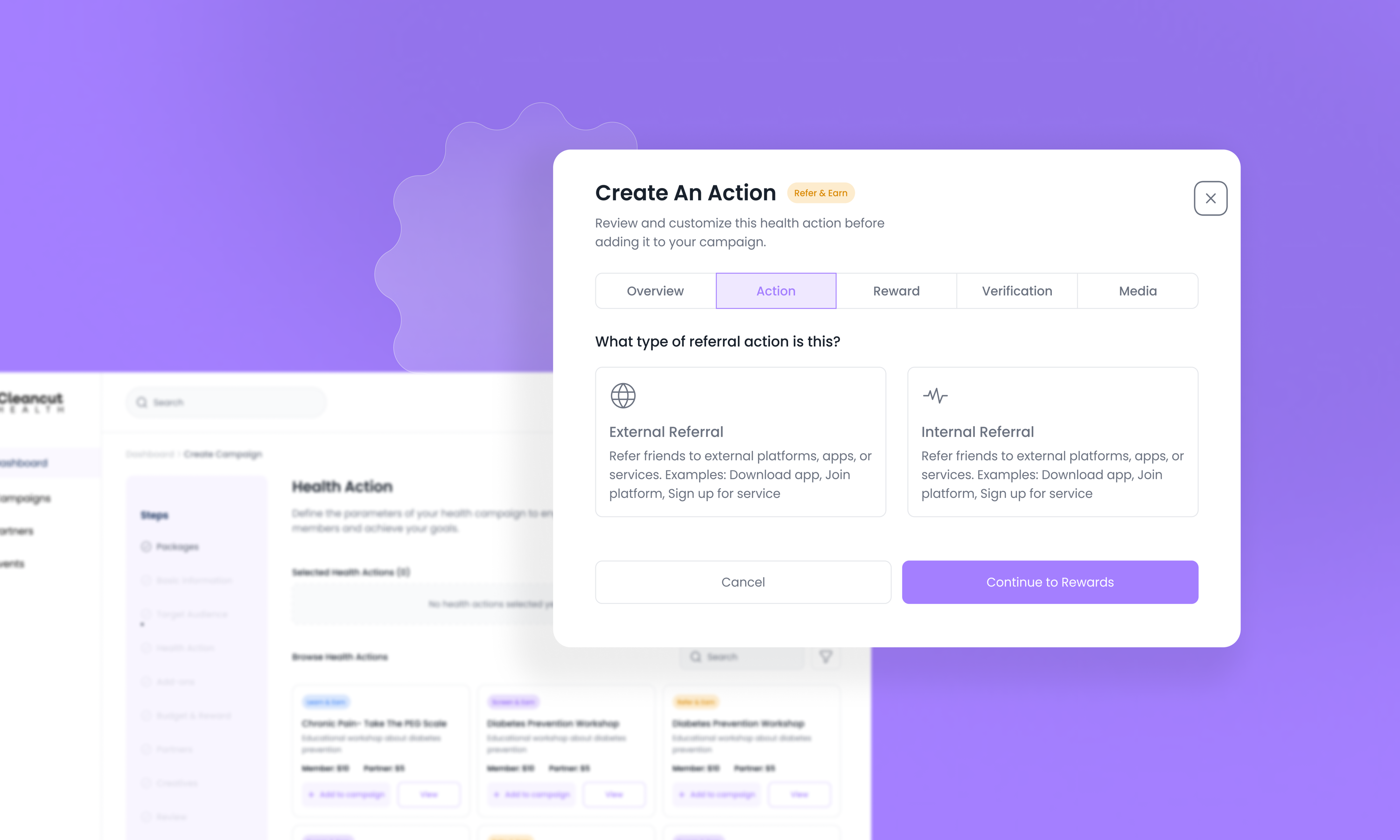
Tension: Build a set of loosely-related portals, or anchor all of them to one shared object.
Move: A single verified health action — a screening, a referral, an enrolment — that members complete, partners facilitate, sponsors fund, and the system measures.
Why:It's the one thing every party agrees has value. Making it the shared unit is what keeps a multi-sided platform — sponsors, members, partners, and the admin who verifies between them — coherent instead of splitting into disconnected products.
Trade-off: Every new action type needs its own verification path, which deliberately limits how fast the catalogue of actions can grow.
Tension: Bespoke campaigns built per sponsor, or campaigns assembled from reusable blocks.
Move: Sponsors compose a campaign from a library of action blocks rather than designing one from scratch.
Why: Composition is what lets campaigns launch in days instead of months, and keeps the experience consistent for the members and partners on the receiving end.
Trade-off: Unusual campaigns give up some bespoke flexibility to the constraints of the block system.
Tension: Optimise for the engaged self-serve member, or for the hard-to-reach member met through a partner.
Move:Built the core path for someone reached in a salon or a church who doesn't trust the system: a trusted partner introduces it, the action is kept dead simple, and the payoff is clear once the action verifies.
Why:That edge is where the model either works or doesn't. If the verified action doesn't happen there, none of the reporting upstream means anything.
Trade-off: Identity verification still sits up front — real friction for exactly this member — so the trusted-partner introduction has to carry them past it. And richer self-serve features for highly-engaged members come second to making the first action effortless.
Two journeys carry the platform, with a single admin gate sitting inside both — sponsors pass through it once per campaign (approval, before launch), members once per completed action (verification, after it). Every gate routes failure back into the flow instead of dead-ending, which is what keeps a provable-behaviour model from leaking the people it's trying to serve.
Sponsor — fund and launch a campaign
Member — complete a verified action
Where they meet.Verification is one decision with two ends. The sponsor's Configure actions step sets the proof method (photo, provider confirmation, or QR check-in) that the member meets at Submit proof and the standard the admin checks at the gate. Defining the proof up front is what makes the action provable down the line — the per-action-proof versus global-standard call from Decision 01, made concrete.
CleanCut is live, and reports a real track record for the model: 750+ health advocates trained, 150+ community spaces activated, 10,000+ people engaged through verified health actions, and a foundation of 80+ peer-reviewed publications behind the approach.
To be straight about it: those are CleanCut's results as a company, and my part was as design consultant and advisor — shaping the product and system thinking rather than owning every screen. What I take from it is the model holding up in the field: pay for verified action, route it through trusted people, reward both sides.
The most trusted health messengers were never in the hospital.